Your business may be well into decline - but you don't notice it
The Land That Got Too Rich: How Abundance Hides Decay in Business—and What Leaders Can Do Differently.
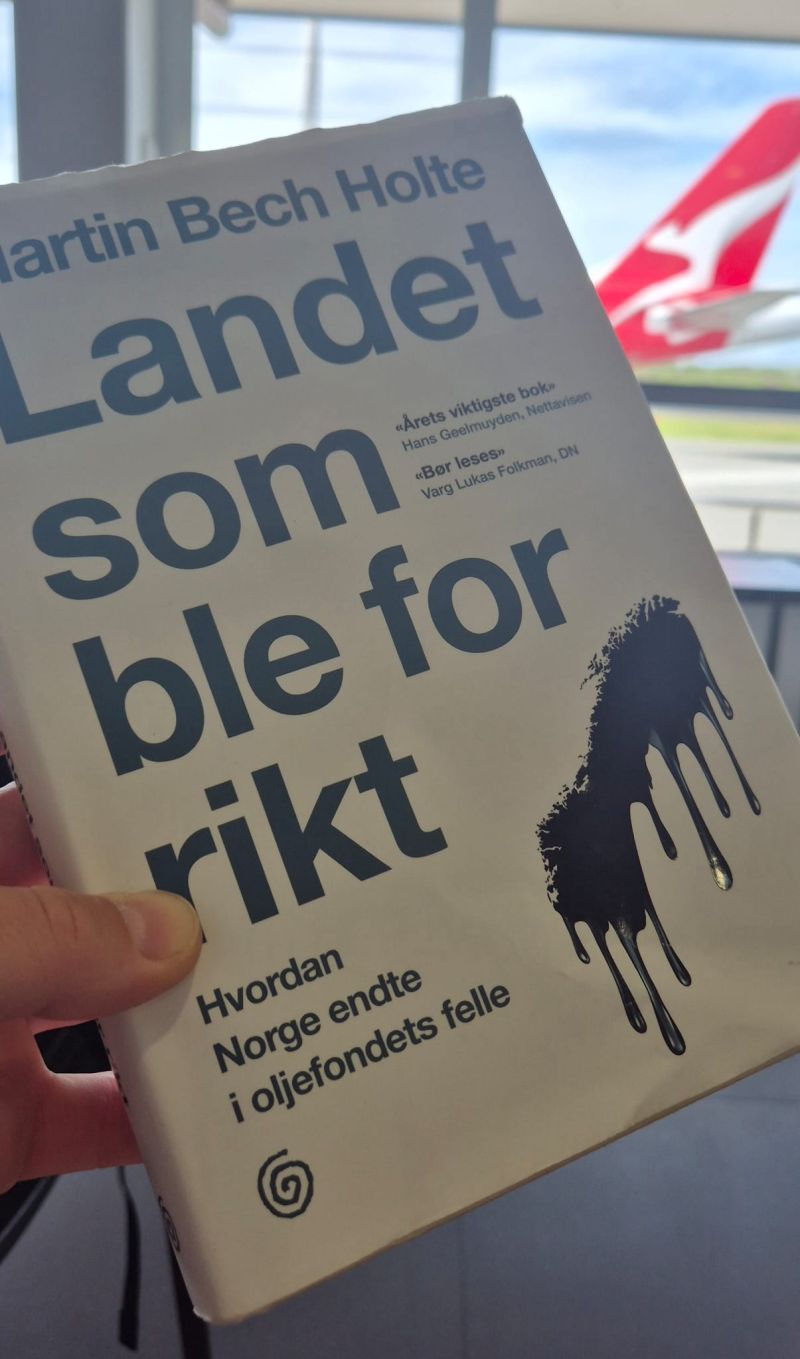
Your business may be well into decline.
But you don't notice it - because the account is full.
On a recent holiday in Australia, I read Martin Bech Holte's book The Land that Got Too Rich. It started as a book about the Norwegian economy. It ended up being the most uncomfortable mirror I have held up to my own leadership experiences.
This is Norway's fault - and probably yours too.
What makes this extra unpleasant is that this is not new. History is full of countries and companies that built enormous values - and lost them. Not because the crisis came suddenly, but because discipline disappeared. Abundance removed the need for prioritization, and the warning lights were ignored because the numbers were still green.
The decay does not happen dramatically, but gradually. The pace slows down a bit. Decisions take a little longer. Responsibility is pulverized. On paper, everything looks fine, but in practice the organization loses momentum. Just like this, Norway's productivity has fallen by 11% since 2013, at the same time as the oil fund grew to over NOK 21,000 billion.
In management groups, I see the same pattern: "We can afford it", therefore inefficiency is tolerated. In sales, we hire more salespeople instead of improving the conversion rate. We increase the marketing budget rather than work systematically with sales enablement, process improvement and smarter use of support functions. Artificial scarcity, even with funds, is often the key to higher productivity.
Then the next thing happens. The best managers and value creators lose patience. When support functions, processes and internal considerations gradually take precedence over actual value creation, I know the wealth trap has struck. Those who create results experience increasing friction and look away. Again, those who are comfortable with the status quo sit. Revenue per employee is falling, but no one is reacting – because the absolute numbers are still growing.
The system produces what you incentivize. Bonus on activities. Pipeline without quality requirements. Sales that are rewarded regardless of margin, customer satisfaction or retention. The result is predictable: sales to the wrong customers.
"We have plenty of time" is perhaps the most dangerous illusion of all. Sweden took around 20 years from top to bottom. Norway may be well into a similar development, but does not notice it as the oil fund masks the pain. The focus shifts away from the core competence. The changes happen slowly at first - and then at an accelerating pace.
In sales, it looks like this: ACV gradually falls. The sales cycle is getting longer. Win rate against primary competitor goes from 60% to 45%. But absolute turnover is still growing 10% annually, so no one is sounding the alarm.
The question is not whether this can be reversed. History shows that it can. What needs to change before the numbers also start to point in the wrong direction?
Relevant next steps
If you would like to discuss a related topic, feel free to get in touch.
Go to contact →