What is most interesting about AI now is what it does to the customer journey, workflow and availability
Reflections from the Econa event: AI creates value when connected to the customer journey, workflow and concrete needs.
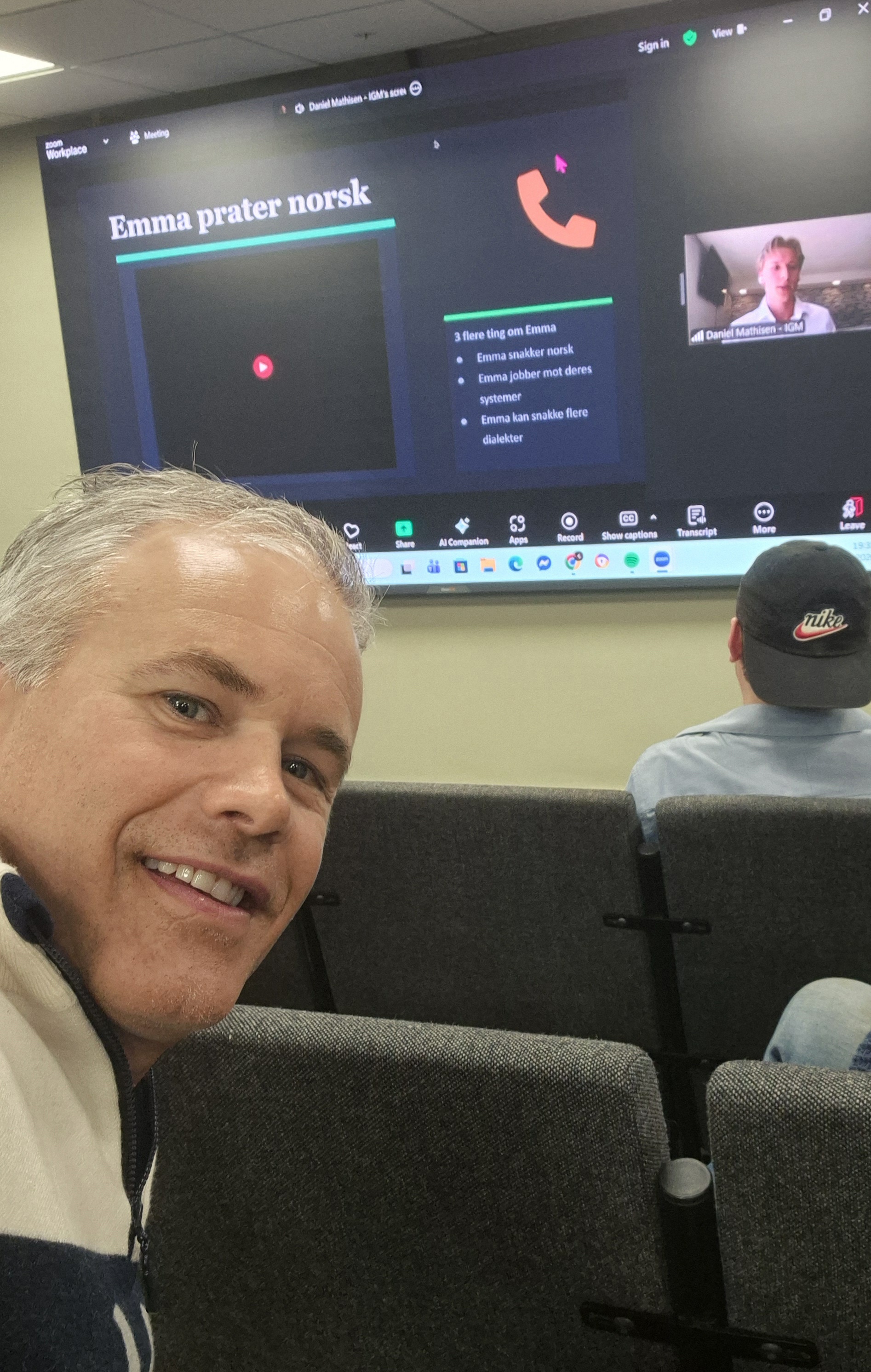
This struck me clearly at the Econa event yesterday.
I am currently working on building both an AI-based chatbot, agents and a smarter booking flow in a private clinic, with the goal of better clarification of needs and a more precise customer/patient journey. That made this especially relevant to me:
AI creates value only when it is connected to the customer journey, workflow and concrete needs.
When I work commercially myself, it is especially exciting to see where the road is heading now, while also being able to help build some of it in practice.
Synne Christiansen and Jens Fredrik Allworthy from Sprint raised an important point: Customer experience is no longer just communication or customer service. It is the sum of all interactions, and AI is in the process of changing them all.
An illustrative example was how buying experiences can move from classic navigation and filtering to the customer simply describing their need in natural language, and getting a relevant solution generated from that. It is a major shift from menu logic to intention logic.
Hanna Vodopic from Devoteam put words to something many underestimate: AI has become "the quiet colleague."
A concrete example was how employees increasingly ask AI before they ask the colleague next to them. It gives speed, but can also weaken learning, knowledge sharing and the friction that often creates better solutions. She also raised the concept of hollow intelligence: that we can appear more capable because AI helps us deliver, without necessarily building deep enough understanding ourselves.
It was an important reminder: AI must not only make us faster. It must be used in a way that also makes us better, wiser and more aligned.
Daniel Kirkenær Mathisen from IGM showed the most operational side of this: digital colleagues and agents that take a role in the frontline.
It became very concrete when he showed how the AI receptionist responds immediately, handles several inquiries at once and transfers to a human when needed.
This is interesting because it moves AI from a support tool to work capacity. It resonates well with something I am building myself now, where agents should not only answer, but contribute to flow, availability and follow-up.
What stands out strongest for me after the evening is that we are moving from AI as something employees "test a little" to AI being built deep into core processes.
That also changes the requirements for us who build:
• We must understand the customer journey
• We must understand the processes
• We must understand where the friction actually is
• And build with a clear human in the loop
This is also where I believe something of the most remarkable is happening now:
Businesses that manage to connect AI to frontline work, booking, needs clarification and follow-up are not only building efficiency. They are building a completely different level of availability and precision in the customer encounter.
That is where much of the competitive strength will lie going forward.
Relevant next steps
If you would like to discuss a related topic, feel free to get in touch.
Go to contact →