You inherit the team. You own the development.
The national team coach picks the squad. Most leaders inherit theirs — and must still own development, roles and results together with the team.
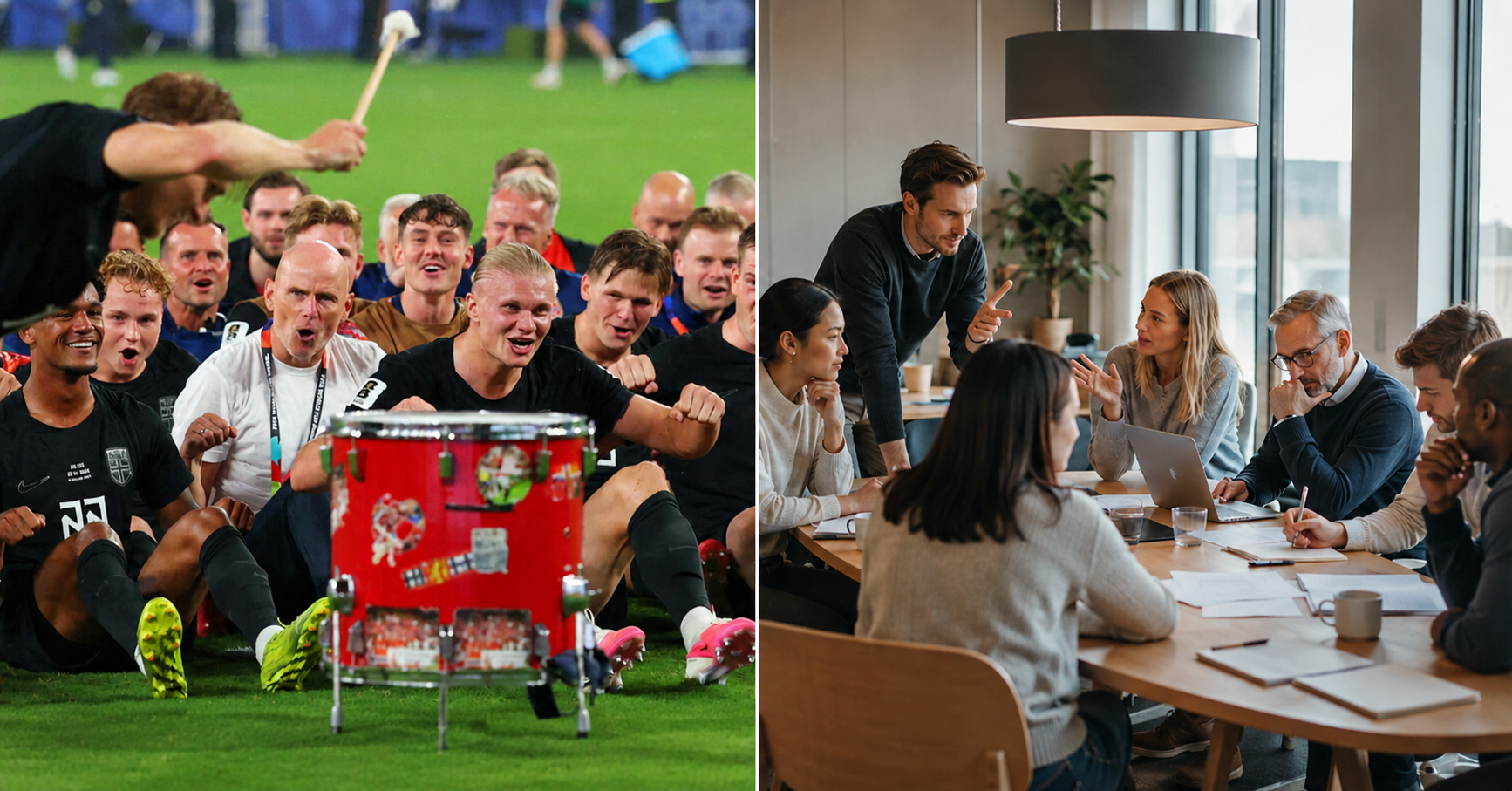
In E24's column «Work life is not a national team», Øystein Bonvik challenges how far we can transfer learning from elite sport to working life.
The main point is simple:
The national team coach picks the squad. Most leaders inherit theirs.
I recognise that well.
I have taken over several established sales teams. Some had a solid foundation that needed to be developed further. Other times the mandate was clear: clean up, strengthen quality, build capacity and lift results.
You do not always get to choose the starting point. But you cannot use that as an explanation for a lack of development.
The leader's first task is therefore not to judge the team from a distance. It is to understand the people, the competence, the dynamics and the demands the organisation actually faces.
What should be preserved? Who can be developed? Which roles need to be clarified? Where is competence missing? And when is it necessary to make changes?
Here lies a fundamental difference between the national team and working life.
A national team coach prepares an already selected squad for a few decisive matches. A leader in working life owns the entire employee journey.
You must recruit, integrate, develop, motivate and correct. At the same time, you must retain important competence and sometimes make demanding people decisions.
Customers must be followed up, targets must be met and operations must work. The season never stops while the team is being built.
That makes the leadership task less glamorous, but often far more complex.
Still, working life can learn from good teams. Not by copying elite sport, but by transferring the principles through clear roles, enough safety to tolerate correction, willingness to celebrate others' success and responsibility for the whole.
Leadership alone does not create the results either. Employee ownership matters just as much. No leader can compensate for people who do not take responsibility for collaboration, culture and the mission.
Another paradox is that in working life we often play a match every day, but train too little. We measure results continuously, but set aside less time for practice, reflection and development.
Bonvik is right that the preconditions are fundamentally different.
But leaders are still measured on what the team develops into, and how results are created together.
It may not be national team leadership.
But it is leadership responsibility.
#Ledelse #Salgsledelse #Teamutvikling #Medarbeiderskap #Kultur
Relevant next steps
If you would like to discuss a related topic, feel free to get in touch.
Go to contact →